Player Scouting

Recruiting for system fit:how to scout players for your playing style

6 min 09.11.2026

Open the shortlist at almost any club during a transfer window and you'll find many of the same names. That isn't a coincidence. Most clubs scout from the same data providers, filter on the same metrics and read the same leaderboards. Shared inputs produce shared shortlists, and shared shortlists push prices up for everyone.

The players who make the biggest difference to a team are often the ones who fit how that team plays. A leaderboard can't tell you that, because it has no idea how you play. This article looks at what system fit means in recruitment, why generic data struggles to measure it, and how a club can turn its own playing style into a scouting filter.

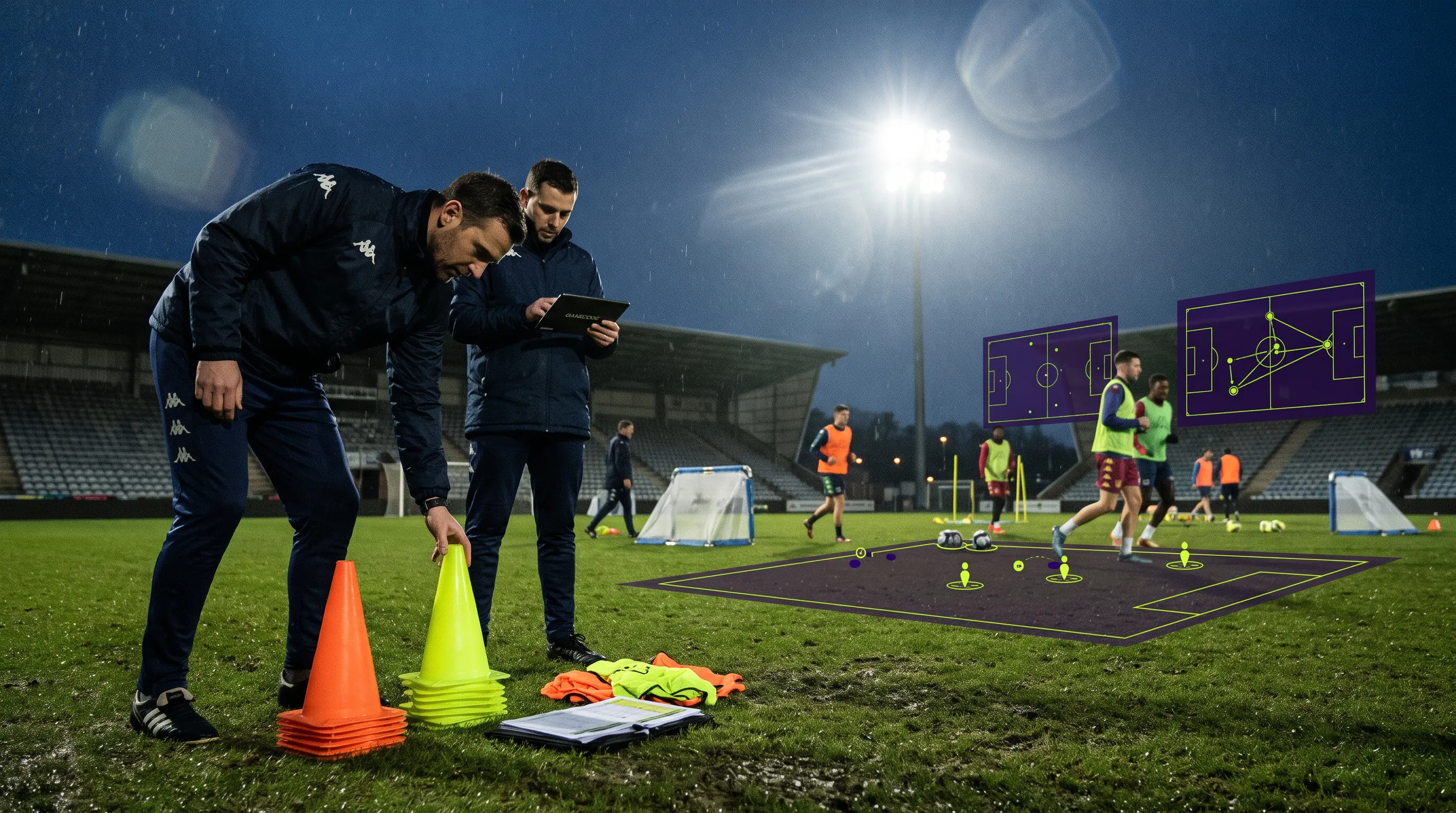
Recruitment analyst reviewing a player target's system fit score on a scouting dashboard

Why do clubs end up chasing the same players?

Recruitment departments are under pressure to move quickly and justify their choices. Standard data helps with both. It covers thousands of players across dozens of leagues, it's consistent, and everyone in the building understands it.

The catch is that the same strengths apply to every club that buys it. If a centre-back ranks highly for aerial duels won and progressive passes, every recruitment team using that data sees the same thing at the same time. The edge disappears before the first phone call.

There's also a quieter problem. Generic metrics describe what a player did in his current team's system. They say little about how he would behave in yours.

What does system fit mean in recruitment?

System fit has two parts, and both matter.

Philosophy fit asks whether the player does the things your game model asks of his position. If your full-backs invert into midfield during build-up, a full-back with excellent crossing numbers may not be the profile you need, however good those numbers look.

Squad fit asks how the player would combine with the teammates around him. A ball-carrying centre-back means something different next to a partner who covers space well than next to one who also wants to step out. The same signing can work at one club and struggle at another.

Put the two together and you have a much better question than "is he good?" The question becomes "is he good for us, alongside these players?"

What does generic scouting data miss?

Most recruitment data is built on events: passes, shots, duels, carries. These describe execution. They show what happened when the player had the ball or challenged for it.

Much of what makes a player fit a system sits elsewhere. Did he scan before receiving? Did he choose the best option available, or just a safe one? Did he attack the right space at the right time? Today these questions are still largely judged by eye, through video and live scouting.

That's expensive and slow, and it can't be done at scale. It's also where mismatches happen. A player with strong numbers arrives, and within a few months it's clear he reads the game differently from the way the coach needs him to.

How do you build a scouting filter from your game model?

The starting point is the same work a club does to measure its own team: turning the game model into KPIs. Once that exists, recruitment can use it as a lens.

1. Define position profiles from your KPIs. For each role, decide which behaviours matter most in your system and how much weight each one carries.

2. Benchmark against your own players. Look at the players who already succeed in that role for you. Their numbers tell you what "good" looks like at your club, which is more useful than a league average.

3. Assess targets through your lens. Score external players on your KPIs, not on generic rankings. How deep you can go depends on the data available for the league each player is in.

4. Model squad fit. Look at how a target's profile combines with the players he would line up alongside, so you can spot overlaps and gaps before you sign him.

5. Hand the shortlist to your scouts. Data narrows the field. Scouts and coaches still make the call, with video and live viewing to confirm what the numbers suggest.

The result is a shortlist that looks different from your rivals', because it was built from different criteria. That's where the advantage comes from.

Where GAMECODE.Ai fits

GAMECODE.Ai lets a club define the algorithms and KPIs that make up its style of play, which can run to 200 or more, and then assess any external player through that exact lens. It goes a step further by modelling how a target would perform inside the current squad, so recruitment can look at philosophy fit and squad fit together.

Clubs can start with the data they already license, so there's no need to replace existing providers to get going. For quick questions during a window, the GAMECODE.Ai scouting assistant answers recruitment queries against the club's own criteria in plain language, on a phone. WELT trialled it with sporting directors in the closing days of this summer's window.

The same lens works inside the club too. If you know which profile your system needs, you can see which academy players are closest to it, and plan for who could step up in 12 or 24 months.

Recruit for how you play

Every club wants to recruit better. The clubs that gain an edge are the ones asking a different question from everyone else. Same data and same filters will keep producing the same names.

When your style of play becomes your scouting filter, the shortlist starts to reflect who you are. If you'd like to see how philosophy fit and squad fit work in practice, get in touch with the GAMECODE.Ai team.

Core insights

Key takeaways to remember

01

Clubs that scout from the same data with the same filters tend to end up with the same shortlists and pay more for the same players.

02

System fit has two parts: philosophy fit, which matches the player to your game model, and squad fit, which matches him to his teammates.

03

Generic recruitment data mostly measures execution on the ball, while decision-making and perception are still judged largely by eye.

04

A club's own KPIs, benchmarked against its successful players, make a more useful scouting filter than league-wide rankings.

05

Data narrows the field, and scouts and coaches still make the final decision.

Deep Dive

FAQ

What does system fit mean in football recruitment?

System fit is how well a player matches the way a team plays. It combines philosophy fit, whether he does what the game model asks of his position, with squad fit, how he combines with the players around him.

How do you scout players for a specific playing style?

Turn your game model into KPIs, define position profiles from them, and benchmark against the players who already succeed in your system. Then score targets on those KPIs rather than generic rankings, and use scouts to confirm the shortlist.

Why do so many clubs target the same players?

Most clubs scout from the same data providers and filter on the same standard metrics. Shared inputs tend to produce shared shortlists.

Can data measure a player's decision-making?

Partly, and it's improving. Event data shows the outcome of a decision, while tracking and skeleton data can show the options a player had and whether he scanned before receiving. Much of this is still assessed by eye today.

Does a club need new data providers to scout this way?

No. With GAMECODE.Ai, clubs can start with the data they already license and build their own KPIs on top of it.